
Blog / Retirement
The bucket strategy for retirement: a simple guide with a $1.5M example
Keep a few years of expenses in safe, boring investments and the rest in stock index funds — so a market crash never forces you to sell at the bottom to pay your bills. Explained with a $1.5M, $5,000/month worked example.
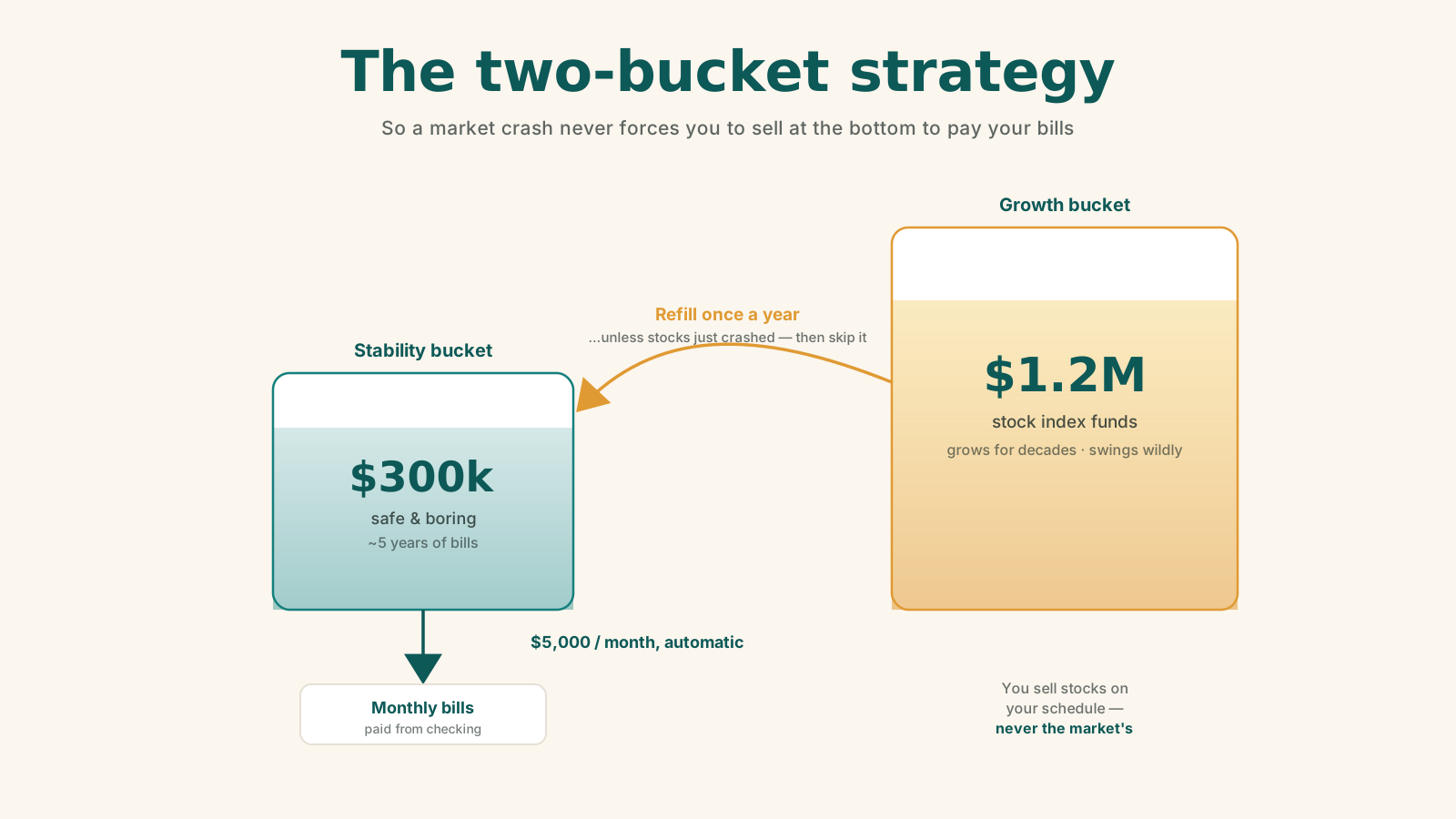
There's one fear that sits underneath every retirement funded by investments: being forced to sell at the worst possible time. The bucket strategy is a simple, durable way to make sure a bad market never forces your hand.
This guide walks through the whole thing in plain English — what it is, how to size it, the one annual decision that runs it, what a brutal worst-case test taught us, and the handful of mistakes that quietly sink people. We'll use one running example throughout: $1.5 million saved, $5,000 a month in spending.
A note on what this is. This is education, not financial advice. Where you hold each bucket (taxable brokerage vs. IRA vs. 401(k)) has real tax consequences, and your situation matters enormously. Talk to a fee-only fiduciary advisor and a tax professional before implementing any withdrawal strategy.
TL;DR
- Keep about 5 years of expenses in safe, boring investments (your stability bucket) and the rest in stock index funds (your growth bucket).
- Pay your monthly bills only from the stability bucket, never directly from stocks.
- Once a year, sell some stocks to refill the stability bucket — unless the market crashed that year, in which case you skip the refill and just spend the buffer.
- In bad years, hold your spending flat instead of taking an inflation raise. That flexibility matters more than everything else combined.
The fear this solves
Imagine you retired in January 2000 with your life savings in the stock market. Over the next three years, the dot-com crash cut the market nearly in half. And just as your portfolio finally clawed back, 2008 arrived and cut it in half again — two historic crashes inside your first decade of retirement.
Now imagine you had to sell those beaten-down investments every single month just to pay for groceries, insurance, and property taxes. Every sale locks in your losses permanently. When the market finally recovers, you own far fewer shares to recover with.
This is the nightmare. Researchers call it sequence-of-returns risk — the danger isn't just whether markets crash, but whether they crash early in your retirement, while you're withdrawing. (If you want the deep version of why the order of returns can make or break a plan, see our guide to the Monte Carlo retirement calculator.) The bucket strategy exists to make sure a bad sequence never forces you to sell.
What a bucket strategy is: think water tanks
Picture the water system in a house. The tap is where you drink every day. The storage tank keeps the tap running. The well is the deep source that slowly refills the tank.
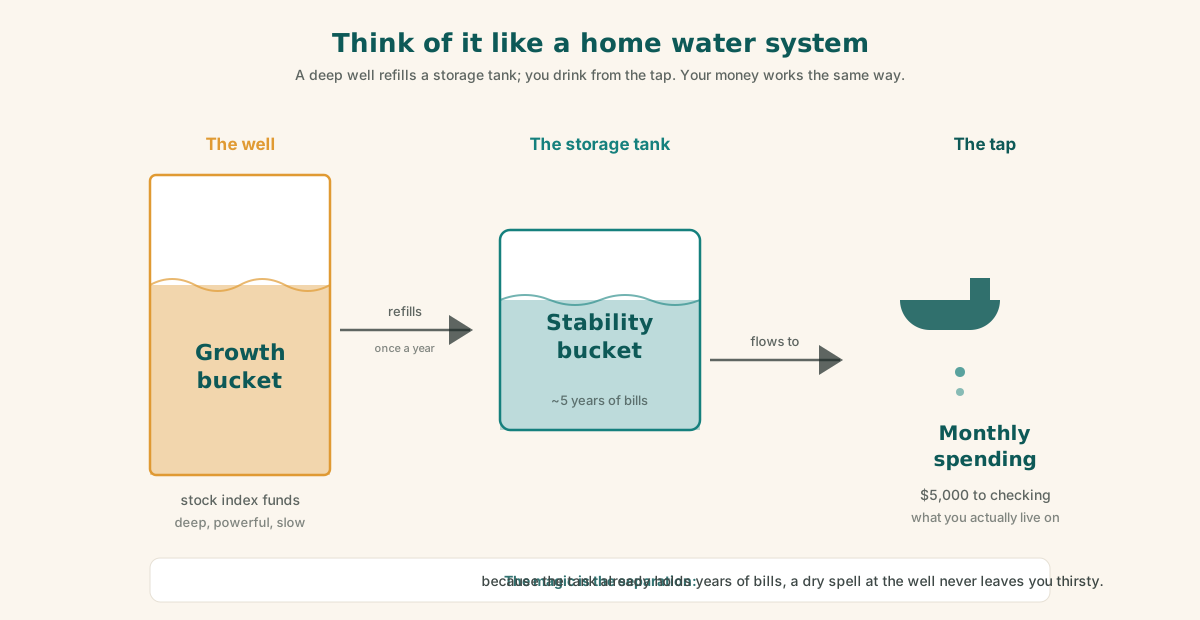
A bucket strategy organizes your retirement money the same way:
- Bucket 1 — the stability bucket (your tank and tap). A few years of living expenses in safe places that don't crash: a high-yield savings account, money market funds (funds that hold ultra-short-term government and bank debt), and a ladder of CDs (certificates of deposit — fixed-term bank deposits) or Treasury bonds. Your monthly spending comes only from here.
- Bucket 2 — the growth bucket (your well). The rest, in index funds — low-cost funds that simply own the whole stock market instead of trying to pick winners. Stocks swing wildly year to year, but over decades they're the only thing that reliably grows faster than inflation.
The magic is the separation. Because your next several years of bills are already sitting safely in Bucket 1, a market crash doesn't force you to sell anything from Bucket 2. You just wait it out.
Two buckets or three? Two is enough
If you've read about this before, you've probably seen a three-bucket version: cash for years 1–2, bonds for years 3–7, stocks for the long term.
Here's the honest truth from retirement research (including work by David Blanchett and Morningstar): the benefit of buckets is behavioral, not mathematical. Buckets don't earn you higher returns. What they do is stop you from panic-selling in a crash — because you can see, in a separate account, that your bills are covered for years.
And a three-bucket plan is really just a two-bucket plan where the safe portion has been split in half and given two labels. Same money, same protection, more rules to maintain. The simpler system is the one you'll still be following correctly in year fifteen. So we'll use two buckets, and simply arrange the investments inside the stability bucket by year — which gives you the clarity of three buckets without the paperwork.
The exact setup: a $1.5 million example
You've retired with $1.5 million and you spend $5,000 per month — that's $60,000 per year.
First, size the stability bucket. The rule: five years of expenses, or 35% of your total money — whichever is smaller.
- Five years of expenses = $60,000 × 5 = $300,000.
- 35% of $1.5 million = $525,000.
The smaller number is $300,000, so that's your stability bucket. Everything else — $1.2 million — goes into the growth bucket.
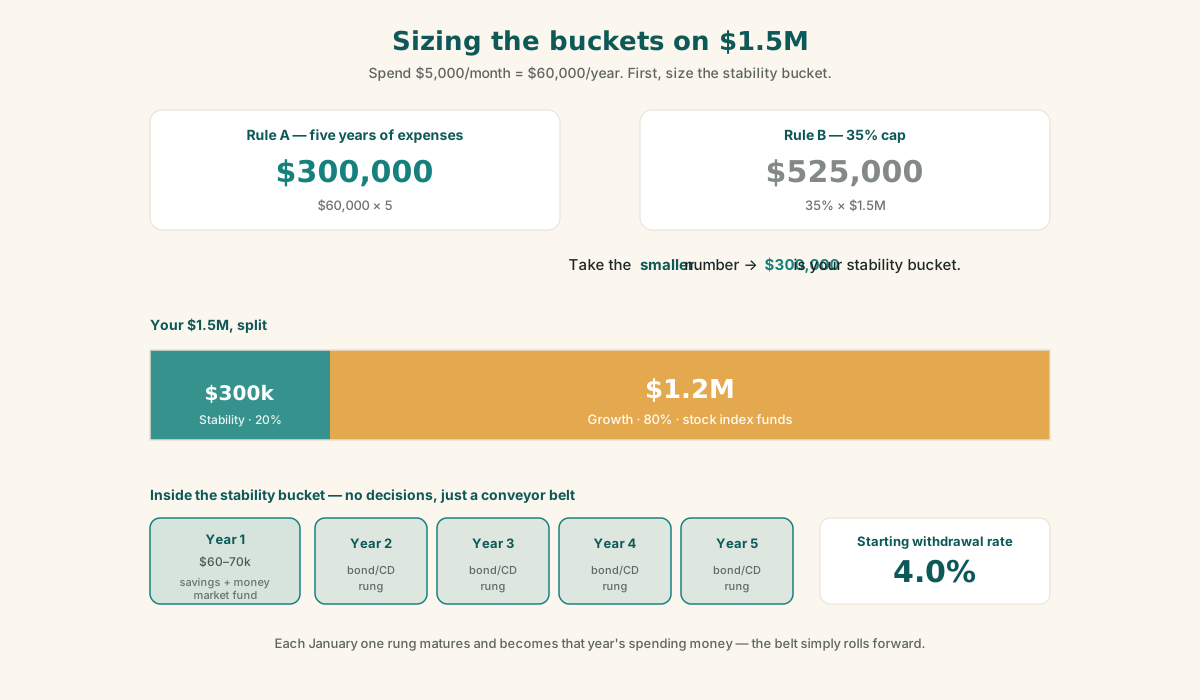
Here's how the money is arranged:
| Bucket | Amount | What it holds | Its job |
|---|---|---|---|
| Stability — year 1 | $60,000–70,000 | High-yield savings and a money market fund | Pays your $5,000 every month via an automatic transfer to checking |
| Stability — years 2 to 5 | ~$240,000 | A ladder of Treasuries, CDs, or defined-maturity bond ETFs (bond funds that mature in a fixed year, like a CD) — one rung maturing each year | Each year, one rung matures and automatically becomes next year's spending money |
| Growth | $1.2 million | Stock index funds — mostly a total US market or S&P 500 fund, with a slice of international | Grows for decades and refills the stability bucket |
Notice there are no decisions inside the stability bucket. The maturities roll forward like a conveyor belt. And your starting withdrawal rate — the share of your wealth you spend in year one — is $60,000 ÷ $1.5 million = 4%, right at the classic benchmark. (For where that 4% number comes from and how modern research has updated it, see Your FIRE number.)
The one-hour January ritual
The whole strategy runs on one annual check-up. Every January:
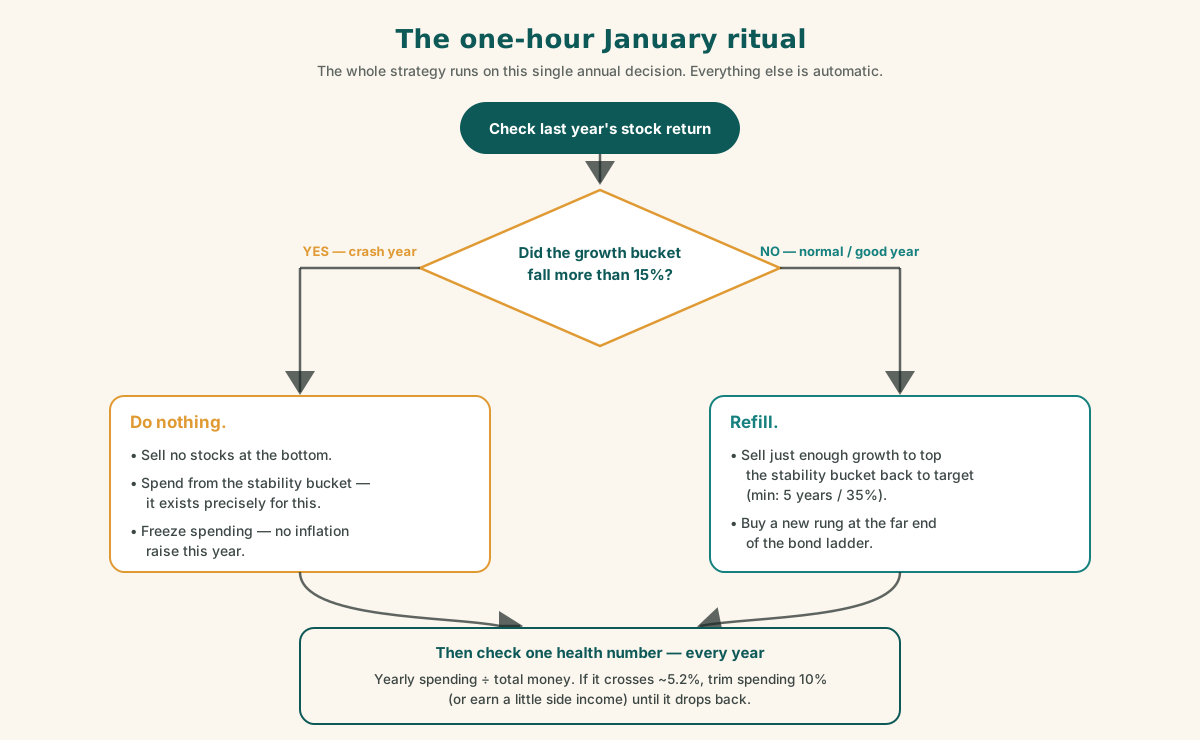
- Look at last year's stock market return. Did your growth bucket fall more than 15%?
- If yes (a crash year): do nothing. Don't sell any stocks. Your stability bucket exists precisely for this — spend from it and let the market recover. Also keep your monthly spending the same as last year (no inflation raise this year).
- If no (a normal or good year): sell just enough from the growth bucket to top the stability bucket back to its target — five years of expenses or 35% of your money, whichever is smaller. Buy a new rung at the far end of your bond ladder.
- Check one health number: divide your yearly spending by your total money. If your withdrawal rate ever crosses about 5.2%, trim your spending by 10% (or earn a little side income) until it drops back.
That's it. Everything else — the monthly transfer, the maturing rungs — happens automatically. You can run these exact rules against thousands of simulated futures in our Bucket Strategy Planner and watch the buffer absorb the bad years.
What the worst-case test taught us
We stress-tested these exact rules against a nightmare start: retiring immediately before a ~50% market crash, followed by years of unusually high inflation. Three lessons stood out.
1. The crash was survivable — the buffer worked. In the crash years, the rules correctly skipped stock sales and spent the buffer instead. Not a single dollar of stocks had to be sold at the bottom. The fear that drives people to buckets? Handled. A retiree from January 2000 would have ridden out both the dot-com crash and 2008 the same way — the five-year buffer covers each downturn while stocks recover.
2. Inflation, not the crash, was the real enemy. A crash is dramatic but temporary; inflation is quiet and permanent. In our test, a retiree who rigidly gave themselves a full cost-of-living raise every single year survived the crash but slowly bled out anyway, because their expenses compounded relentlessly while their portfolio was still healing. Anyone who watched their grocery bill in 2022 knows this force is not hypothetical.
3. Spending flexibility beat every structural choice. The version of the plan that simply paused inflation raises after bad years and trimmed 10% when the withdrawal rate got too high ended up nearly three times wealthier than the rigid version — with no change to buckets, funds, or allocation. Just flexibility.
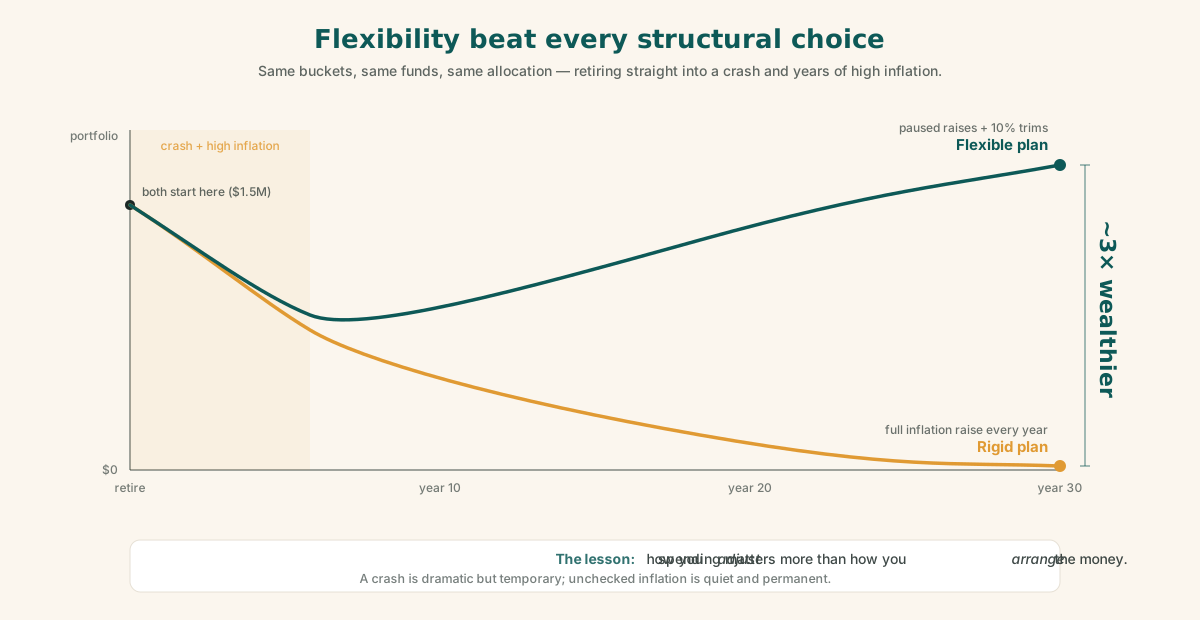
This matches the broader research: how you adjust matters more than how you arrange. The buckets get you to stay in your seat; the spending flexibility is what actually keeps the plan alive.
Three mistakes to avoid
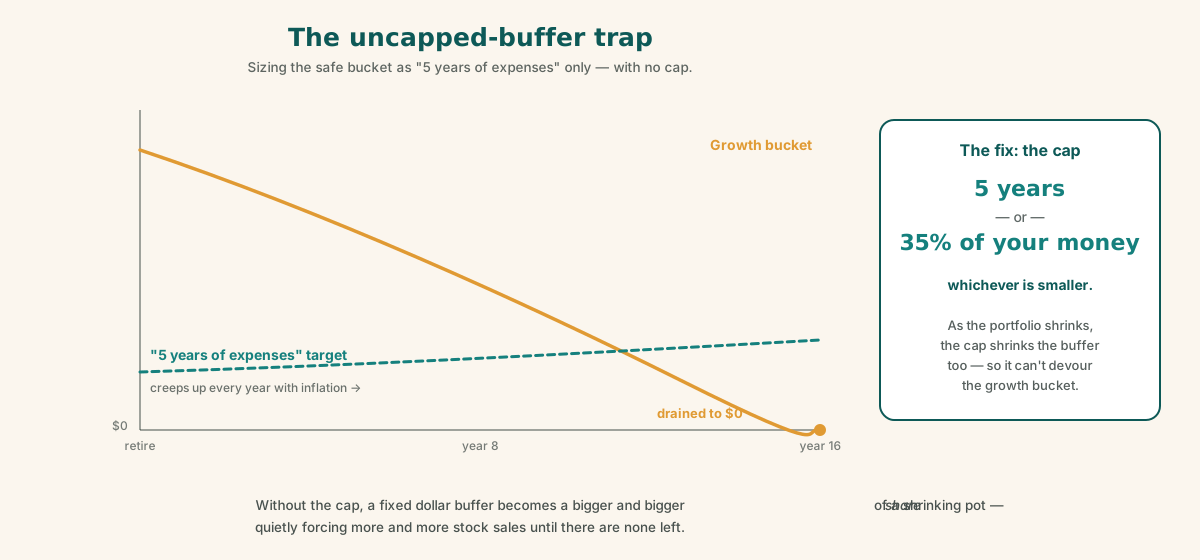
The uncapped buffer trap. If you define your safe bucket only as "five years of expenses," it quietly grows every year with inflation — while your total wealth may be shrinking. In our test, this silently drained the stock bucket to zero over 16 years. The fix is the cap: five years of expenses or 35% of your money, whichever is smaller.
Rigid inflation-indexed spending. Giving yourself an automatic cost-of-living raise every year, even after terrible market years, is how portfolios quietly fail. Skip the raise after a bad year. You will barely feel it; your portfolio will thank you for decades.
Chasing yield in the safe bucket. The stability bucket's job is to be boring, not to earn an extra 1–2%. Junk bonds, dividend-chasing funds, and long-term bond funds (which can drop sharply when interest rates rise) defeat the entire purpose — if the safe bucket can crash too, you have no safe bucket.
Frequently asked questions
What if the market stays down for many years? Your stability bucket covers roughly five years, and history says that's enough runway for most recoveries. If a downturn drags on, the guardrail kicks in: trim spending 10% or add a little income, which stretches the buffer much further than you'd expect.
How does Social Security fit in? Beautifully — it's the most common reason to temporarily oversize the stability bucket. If you retire at 62 but plan to claim at 67 to get the bigger check, put those five "bridge" years of full expenses into the stability bucket up front. Once Social Security starts, your withdrawals shrink and the bucket can shrink back to normal. (Social Security also rises with inflation on its own, independent of any spending freeze you make.)
Is 4% actually safe? With rigid, fully inflation-indexed spending, 4% has historically worked most of the time — the famous "4% rule." With the flexibility rules above, our worst-case testing says the odds improve dramatically. The flexibility is the safety.
When do I ever change this plan? Almost never. The planned changes: shrink the buffer when Social Security or a pension starts, and step it up a year or so if a part-time income stream ends.
Can I do this with more or less than $1.5 million? Yes — the structure is identical at any size. Compute five years of your expenses, apply the 35% cap, and the rest goes to growth. What changes with a smaller portfolio is your withdrawal rate, and that's the number to watch.
Summary
The bucket strategy is one idea — never sell stocks in a crash to pay your bills — turned into a routine you can actually keep:
- Split your money into a safe stability bucket (about 5 years of expenses, capped at 35% of the portfolio) and a growth bucket of stock index funds.
- Spend only from the stability bucket. Bills come from safe money, on your schedule.
- Refill once a year by selling growth — but skip the refill after a crash and live off the buffer instead.
- Stay flexible on spending: freeze the inflation raise after bad years, and trim 10% if your withdrawal rate climbs past ~5.2%.
The buckets keep you calm; the flexibility keeps you solvent. In the worst historical sequences, that combination is what turned a plan that slowly bled out into one that ended several times wealthier.
Key takeaways
- The real risk is being forced to sell early. Sequence-of-returns risk, not average returns, is what breaks retirements — and the bucket structure exists solely to neutralize it.
- Buckets are behavioral, not magical. They don't raise your returns; they stop you from panic-selling. Two buckets deliver the whole benefit with far less to maintain than three.
- Size it with a cap. Five years of expenses or 35% of your money, whichever is smaller. The cap is what prevents the safe bucket from quietly draining the growth bucket.
- The crash-skip rule is the core move. After a down-more-than-15% year, don't refill — spend the buffer and let stocks recover.
- Flexibility beats structure. Pausing raises after bad years and trimming 10% when the withdrawal rate is high mattered more than any allocation choice — nearly 3× the ending wealth in our stress test.
- Keep the safe bucket boring. High-yield savings, money market funds, and a Treasury/CD ladder. If it can crash, it isn't a stability bucket.
- Try it on your own numbers. The Bucket Strategy Planner runs these rules across thousands of simulated futures and against the real January-2000 sequence, entirely in your browser.
Disclaimer
This article is for education only and is not financial, tax, or investment advice. Where you hold each bucket matters for taxes (taxable brokerage vs. IRA vs. 401(k)), and your personal situation matters enormously. Please consult a fee-only fiduciary financial advisor and a tax professional before implementing any withdrawal strategy.
Related reading
Will my money last? A beginner's guide to the Monte Carlo retirement calculator
What a Monte Carlo retirement calculator actually is, how it works under the hood, and how to read every number it gives you — explained in plain English.
Technical analysis from first principles: a beginner's complete guide
A thousand patterns have a thousand names — and every one of them is a footnote to a single tug-of-war between buyers and sellers. Candlesticks, chart patterns, support and resistance, moving averages, Bollinger Bands, MACD, and multi-time-frame analysis, explained from the ground up.
Your FIRE number: every major method, calculated and compared
There's one equation underneath every FIRE calculator. The whole debate is about how to set one number in it. A field guide to seven methods — Bengen's 4% rule, Morningstar's forward-looking SWR, CAPE-linked rates, Guyton-Klinger guardrails, dynamic withdrawals, and the variants (Lean, Fat, Coast, Barista) — plus the architecture that combines them.